In brief
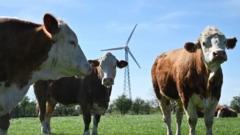
In a significant move towards environmental sustainability, Denmark has reached a landmark agreement to introduce the first-ever tax on agricultural emissions, aiming to mitigate methane produced by livestock. After extensive negotiations among political parties, farmers, trade unions, and environmental advocates, the framework for this “flatulence tax” was established under the Green Tripartite agreement, initially disclosed in June.
Beginning in 2030, farmers will incur a levy of 300 kroner ($43; £34) per tonne of methane emissions, which is projected to escalate to 750 kroner by 2035. Jeppe Bruus, Green Tripartite minister, emphasized the monumental task ahead: transforming substantial agricultural land into forestry and natural habitats to rejuvenate local ecosystems, notably the fjords. Additionally, the agreement seeks to address nitrogen pollution with plans to reduce it by 13,780 tonnes annually starting in 2027. Key components of the agreement also include ambitious plans for biodiversity enhancement, with the goal of planting 250,000 hectares of new forests and restoring 140,000 hectares of degraded peatlands. This transformative initiative aims to reshape Denmark's landscape significantly, in a manner not seen since the drainage of wetlands in 1864. Denmark's Minister for Climate, Energy and Utilities, Lars Aagaard, affirmed the nation’s commitment to climate action and highlighted the collaboration among various stakeholders as a model for global cooperation in combating climate change. The innovative approach of the “flatulence tax” showcases Denmark's pursuit of sustainable agriculture and environmental restoration, potentially paving the way for similar initiatives worldwide.