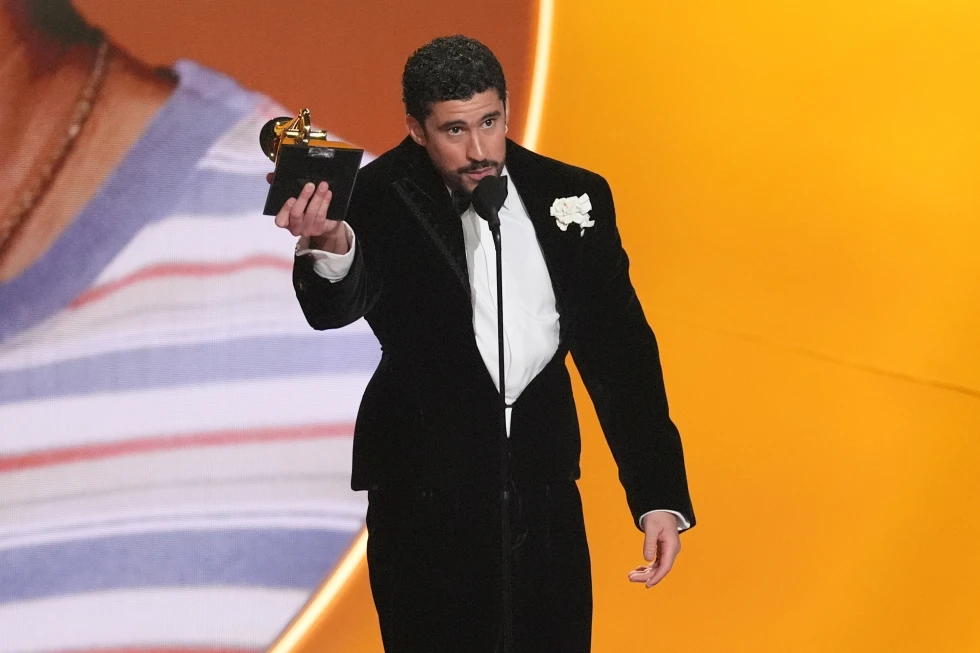
LOS ANGELES (AP) — 'Debí Tirar Más Fotos,' the celebrated album by Bad Bunny, clinched the coveted Album of the Year at the 2026 Grammy Awards on Sunday night, a recognition heralded by many industry experts despite initial doubts about its victory.
This year's Grammys took an unexpected turn, with multiple celebrities using their platform to voice opposition against Immigration and Customs Enforcement (ICE). Of the nine televised awards presented, almost half of the winners delivered acceptance speeches highlighting the importance of immigration.
Shifting Paradigms at the Grammys
Historically, the Grammy Awards have faced criticism for their lack of diversity, especially regarding nominations for artists of color, women, and those from genres like rap and Latin music. However, recent efforts by the Recording Academy to diversify its voting members, including the addition of 3,800 new voters in 2025, have begun to change this narrative. Notably, 58% of these new members identified as people of color, and half were 39 and younger.
The impact of these changes was evident as the 2025 ceremony witnessed wins for artists like Beyoncé and Kendrick Lamar. Continuing this trend, Bad Bunny's win signifies a significant milestone, making him one of the few Latino artists to be honored in this category.
Embracing Cultural Heritage
Bad Bunny’s album is not just recognized for its commercial success; it has been celebrated for its deep cultural resonance. Blending traditional Boricua sounds with contemporary genres like reggaeton and electronic pop, 'Debí Tirar Más Fotos' illustrates the rich tapestry of Puerto Rican identity. As music scholar Vanessa Díaz states, the moment is a win for the recognition of overlooked Latin music.
This politically charged album resonates beyond Puerto Rican identity, touching on universal struggles, such as the themes of cultural autonomy presented in tracks like 'Lo que le pasó a Hawaii.'
Bad Bunny's Grammy win coincides with his upcoming performance at the Super Bowl halftime show, marking a historic celebration of Latino culture and artistry.
Anti-ICE Statements Take Center Stage
Throughout the Grammy Awards, anti-ICE sentiments echoed loudly. Bad Bunny, Billie Eilish, and Olivia Dean seized their moment to advocate for immigrant rights, with Eilish stating, “No one is illegal on stolen land” and Dean emphasizing her heritage as the grandchild of an immigrant.
During the pre-televised ceremony, Shaboozey also paid tribute to immigrants, underscoring that they play a fundamental role in America’s narrative. His heartfelt remarks echoed the sentiments of many who feel disheartened by the current immigration landscape.
As Bad Bunny accepted his award for música urbana, he dedicated his speech to the moment, affirming, “We’re not savage, we’re not animals, we’re not aliens. We are humans and we are Americans,” challenging derogatory language associated with immigration.
A Historical Moment
Given the fraught history of Puerto Rico’s relationship with the U.S., Bad Bunny's success at the Grammys represents both a celebration of culture and an urgent call for recognition in a politically charged environment. The juxtaposition of joy and tension in the community has ignited hope for continued representation and inclusion.
Díaz captures this sentiment well: “Our communities are being targeted. These winds right now that feel celebratory of the Spanish language, which is being literally criminalized — these winds, right now, for a community that is being targeted on such a deep level — it is a little bit of light.”