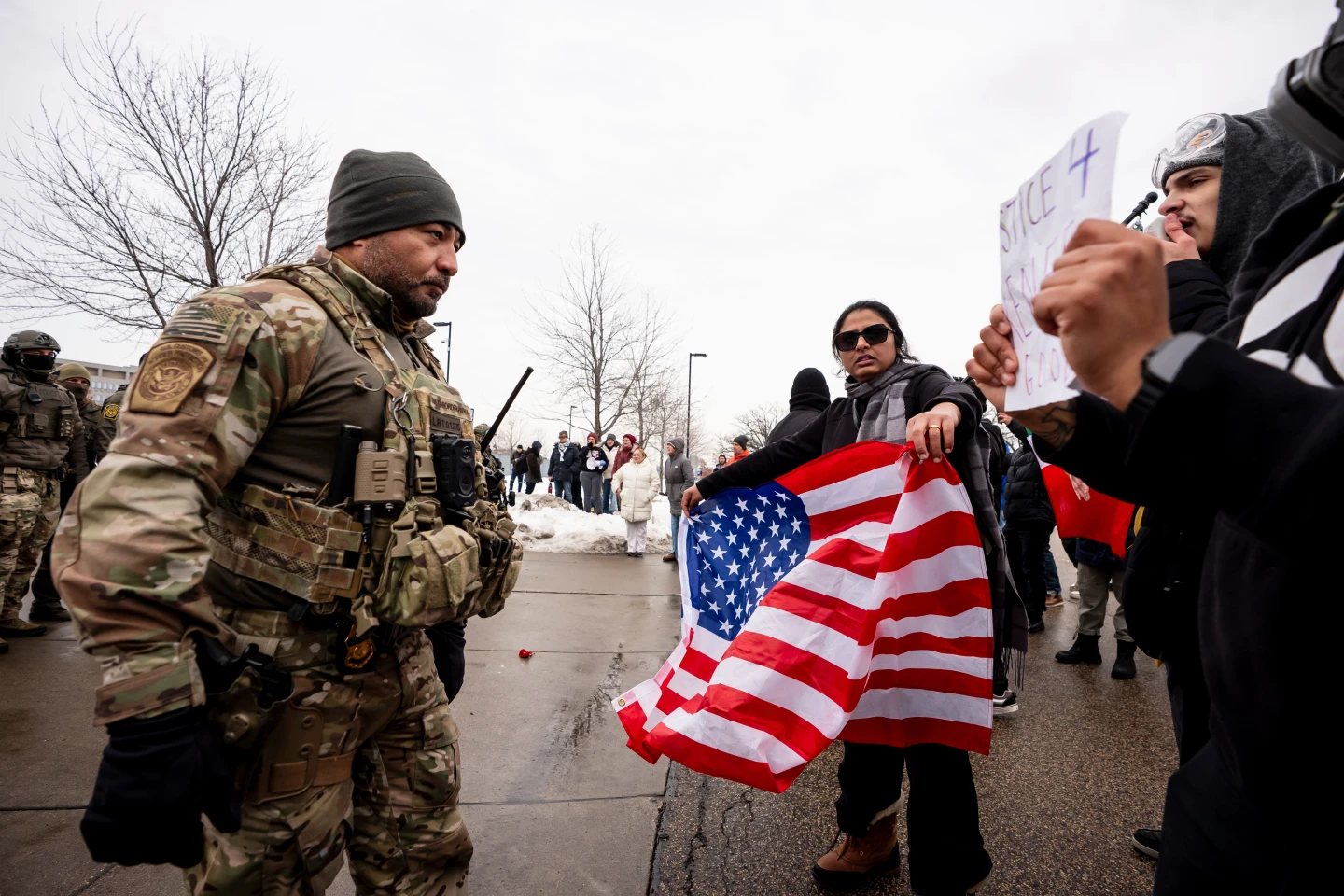
A day after a federal immigration officer fatally shot a woman in Minneapolis, the case escalated sharply when federal authorities blocked state investigators from accessing evidence, asserting that Minnesota has no jurisdiction to investigate the killing.
Legal experts highlighted a central question regarding the ability to criminally charge federal agents during federally authorized operations. The FBI informed state officials that they would not participate in the investigation of the shooting that killed Renee Good on Wednesday, as local prosecutors assessed their options amidst federal dominance over the case.
Minnesota Governor Tim Walz has urged federal officials to reconsider their stance, referencing public statements from federal leaders which risk undermining confidence in the investigation's integrity. He emphasized the necessity for transparency and the community's trust in the judicial process.
Experts indicate that while there is limited precedent for state charges against federal officers, they often cite immunity under the Constitution's Supremacy Clause. Legal definitions indicate that charges can only proceed if they demonstrate violations of both state and federal law, particularly if excessive force was used.
The FBI's refusal to cooperate with state investigators has raised serious concerns within the community and state officials about the investigation's independence. Minnesota Attorney General Keith Ellison stated that the state would continue its own parallel investigation despite federal restrictions.
Subsequent to the shooting, significant concerns arose regarding the provision of medical aid to Good, as video evidence indicates delays in medical assistance which could potentially be scrutinized within the investigation. Legal analysts will be assessing how this incident unfolds, particularly regarding the state's capacity to hold federal agents accountable.