University professor Xavier Crettiez admits that he doesn't know the real names of many of the students on his course. This is a highly unusual state of affairs in the world of academia, but Prof. Crettiez's work is far from standard.
Instead, he helps train France's spies.
I rarely know the intelligence agents' backgrounds when they are sent on the course, and I doubt the names I'm given are genuine anyway, he says.
If you wanted to create a setting for a spy school, then the campus of Sciences Po Saint-Germain on the outskirts of Paris seems a good fit. With dour, even gloomy-looking, early 20th-century buildings surrounded by busy, drab roads and large, intimidating metal gates, it has a very discreet feel.
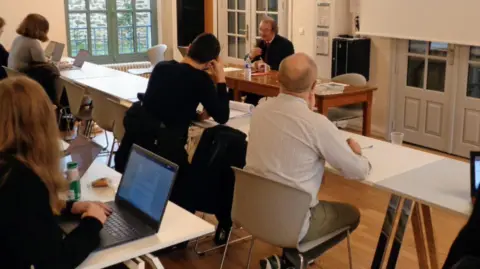
The Diploma of Intelligence and Global Threats, designed by Sciences Po in association with the Academie du Renseignement, combines typical 20-something students with active members of the French secret services, often between 35 and 50 years old.
After the 2015 terrorist attacks, French authorities requested the development of this diploma to train new spies and provide ongoing training to existing ones. The result has seen a significant recruitment surge within French intelligence agencies, which now boast around 20,000 agents.
The diploma comprises 120 hours of classwork, with an enrollment fee of around €5,000. Students learn about organized crime, jihadism, business intelligence, political violence, and how to track and overcome these threats.
While attending, I had to pass a vetting process conducted by the French security services. In class, I interacted with students, including a consultant named Roger, who stated, I provide consultancy across west Africa, and I joined the course to provide risk assessments to my clients there.
Concealing their identities, the spies often huddle together, hinting at their covert roles. Despite their desk-bound positions, they gain fresh insights in this academic setting, emphasizing the need for analytical skills over action hero-like escapades.
Prof. Crettiez pointed out the growing interest from the private sector, with companies across various sectors keen to enroll their security staff in the diploma program. Graduates are increasingly sought after by major firms, showcasing a significant intersection between intelligence and business security.
With nearly half of this year’s class consisting of women, the profile of aspiring spies is evolving, with students motivated by a sense of patriotism and the desire to make the world a safer place. This evolution reveals a unique trend in intelligence careers, marking a distinct shift in societal attitudes toward espionage.
Overall, the Science Po Saint-Germain program exemplifies how educational institutions can play a critical role in national security and the development of future intelligence professionals.