Ireland, Spain, the Netherlands, and Slovenia will boycott the 2026 Eurovision Song Contest, after it was decided Israel could compete.
They were among a number of countries who had called for Israel to be excluded over the war in Gaza and accusations of unfair voting practices.
But at a meeting in Geneva where a vote was held on new safeguards, a large majority of members agreed there was no need for a further vote on participation and that Eurovision 2026 could proceed as planned, the European Broadcasting Union (EBU) said.
Spanish broadcaster RTVE, which had led calls for a secret ballot on the issue, said the decision had increased its distrust of the festival's organisation.
Ireland's RTÉ said it felt that its participation remains unconscionable given the appalling loss of lives in Gaza and the humanitarian crisis there which continues to put the lives of so many civilians at risk.
Spain is one of Eurovision's Big Five countries along with France, Germany, Italy and the UK. Their artists are allowed straight into the final, as their broadcasters provide the largest financial contribution to the EBU.
Approximately 50 broadcasters, including the BBC, attended an EBU meeting on Thursday to discuss the future of the contest, which is watched by more than 150 million people each year.
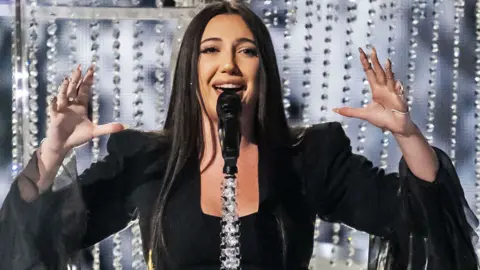
They were asked to back new rules intended to discourage governments and third parties from organising voting campaigns for their acts, after allegations that Israel unfairly boosted its entrant, Yuval Raphael, this year.
BBC News understands that voting to accept those measures was tied to a clause whereby members agreed not to proceed with a vote on Israel's participation.
The decision has exposed a deep rift in the Eurovision community, with multiple broadcasters expressing their unwillingness to participate under the current political climate.
While certain Nordic and European broadcasters supported the EBU's ruling and expressed their intention to compete, the willingness to overlook ethical considerations concerning Israel's inclusion raises substantial questions about integrity and inclusivity within the festival.