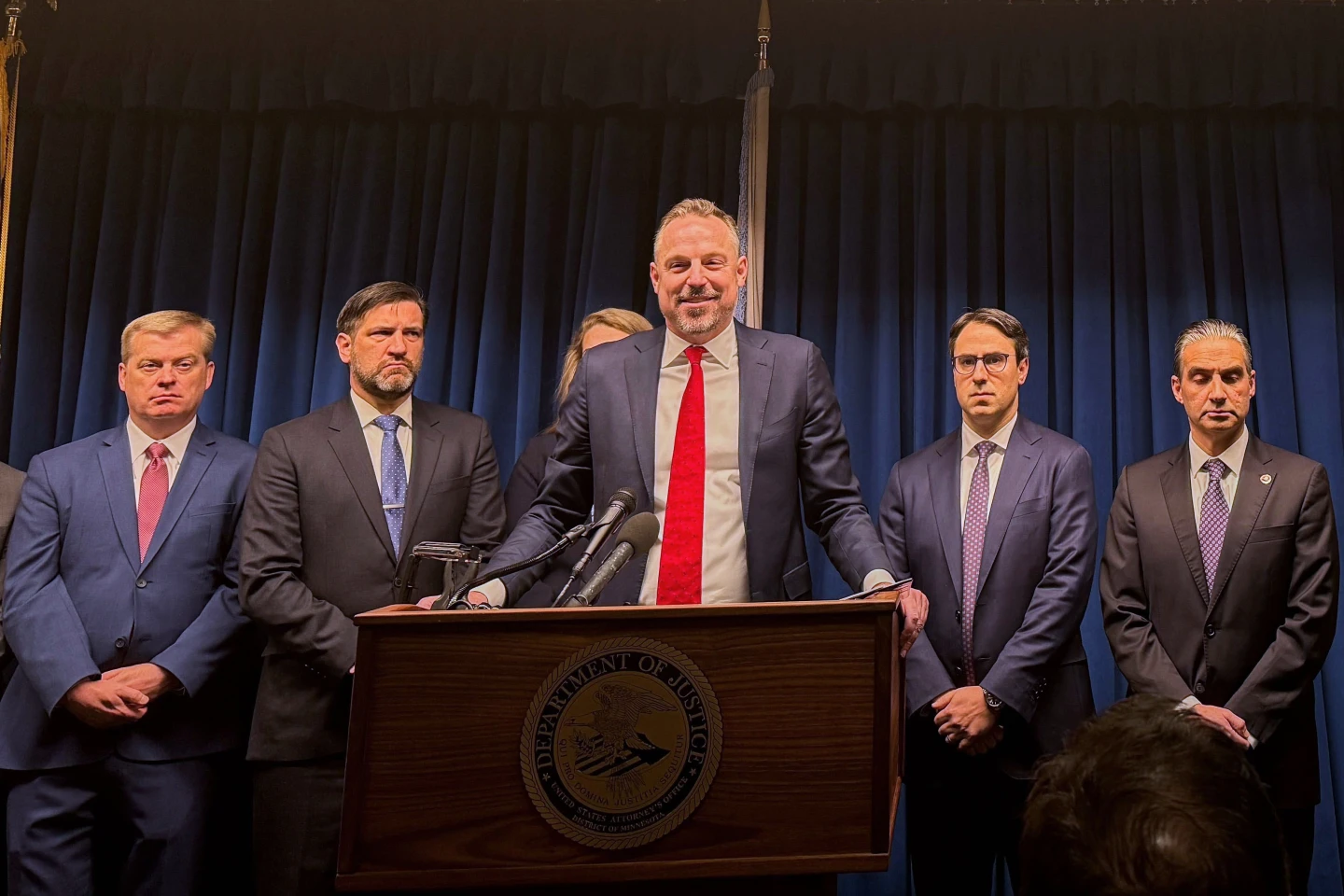
MINNEAPOLIS (AP) — Federal prosecutors in Minnesota are cracking down on widespread Medicaid fraud as new charges surface against multiple state-run programs. U.S. Attorney Joe Thompson disclosed during a press conference that approximately 14 programs are being scrutinized for significant fraudulent activities.
As part of ongoing investigations, authorities are reporting that a staggering portion of the nearly $18 billion disbursed by Medicaid in Minnesota is believed to stem from fraudulent claims.
Thompson remarked, What we see in Minnesota is not a handful of bad actors committing crimes. It’s swamping Minnesota, indicating a systemic issue rather than isolated incidents.
This revelation is being utilized politically, with President Trump asserting that Minnesota under Governor Tim Walz has become a “hub of fraudulent money laundering.” He has also used these cases to focus attention on the Somali diaspora within the state, making inflammatory remarks during his campaign speeches.
Thompson reported that the investigation has yielded new defendants linked to fraudulent housing services. One scheme involved multiple defendants who allegedly diverted $750,000 instead of providing housing support to Medicaid beneficiaries, using the proceeds for lavish international trips.
In another striking case, one individual allegedly filed $1.4 million in fraudulent claims, some of which were used to buy cryptocurrency before he fled the country upon receiving a subpoena.
Prosecutors are also pursuing charges against an individual implicated in defrauding a program intended for children with autism, where millions in claims were submitted fraudulently. Thompson expressed concern about the repercussions of these fraudulent activities on individuals genuinely in need of these services, stating, There’s real patients, real clients, real people who need services and aren’t getting them, emphasizing the urgency of addressing the issue.
Authorities have stated that Minnesota's scale of Medicaid fraud is unprecedented and poses serious risks to legitimate services required by vulnerable populations.