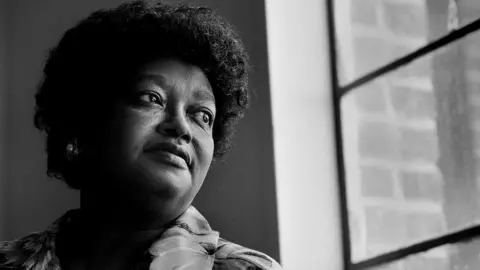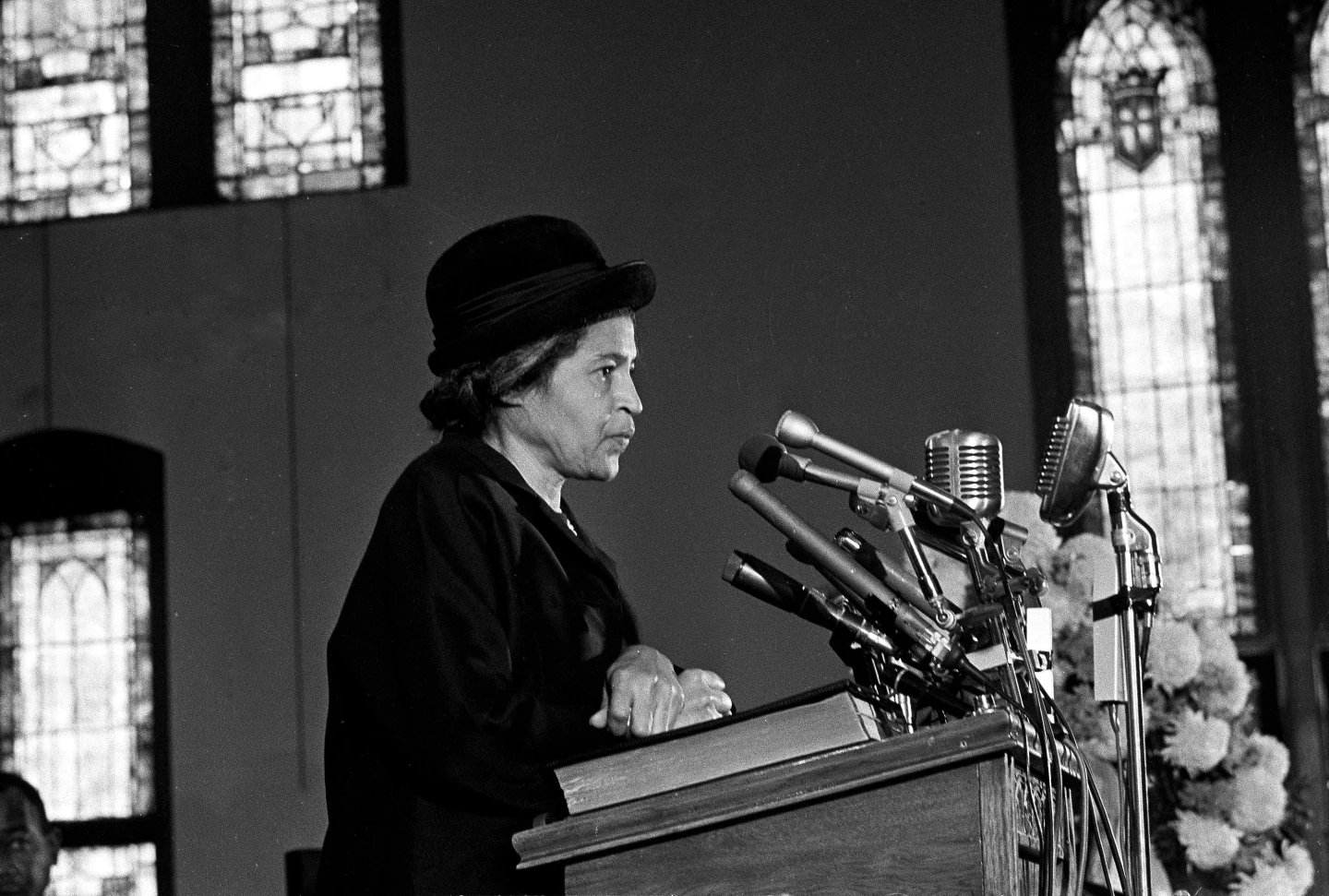
MONTGOMERY, Ala. (AP) — Seven decades after Rosa Parks was thrust indelibly into American history for refusing to give up her bus seat in Montgomery, Alabama, new photos of the Civil Rights Movement icon have been made public for the first time, and they illustrate aspects of her legacy that are often overlooked.
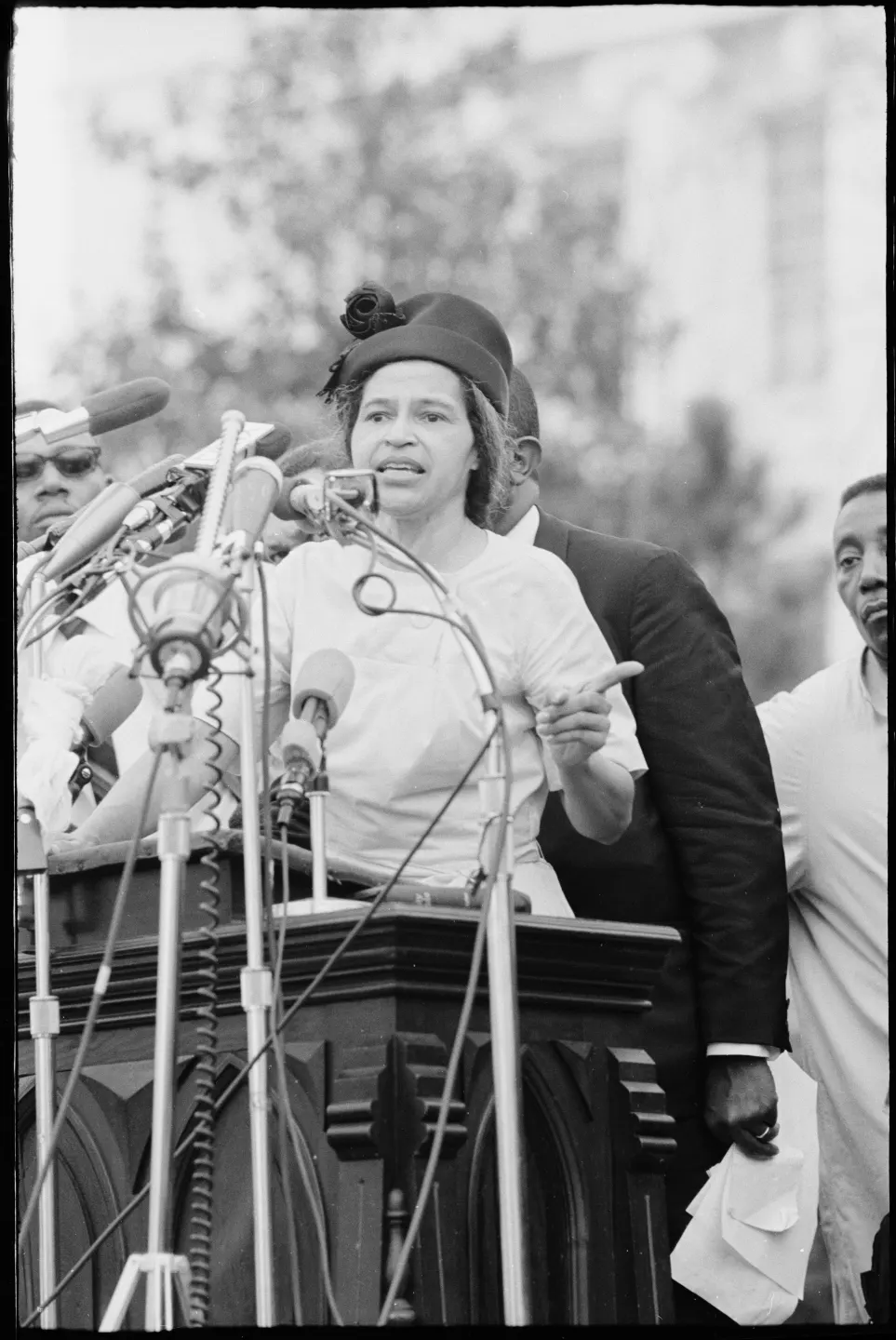
The photos were taken by the late Civil Rights photographer Matt Herron, and they depict Parks at the march from Selma to Montgomery in 1965 — a five-day-long, 54-mile (87-kilometer) trek that is often credited with galvanizing political momentum for the U.S. Voting Rights Act of 1965.
History lessons tend to define Parks by her act of civil disobedience a decade earlier, on Dec. 1, 1955, which launched the Montgomery Bus Boycott. On Friday, some boycott participants and many of the boycott organizers’ descendants gathered to mark 70 years since the 381-day struggle in Alabama’s capital caught national attention, overthrowing racial segregation on public transportation.
The never-before-seen photos released to the Rosa Parks Museum in Montgomery last week, taken a decade after the boycott, highlight that her activism began before and extended well beyond her most well-known act of defiance, said Donna Beisel, the museum’s director.
“This is showing who Ms. Parks was, both as a person and as an activist,” Beisel said.
Never Printed Before
Many other photos place Parks among the other Civil Rights icons who attended the march, including some that were taken by Herron. However, others were never printed or displayed during the photographer’s lifetime. Herron moved to Jackson, Mississippi in 1963 after Civil Rights activist Medgar Evers was assassinated. His work captured notable people and events of that time but often focused on everyday people who empowered Civil Rights leaders to create change.
Herron’s wife, Jeannine Herron, shared that the recently publicized photos were discovered from a contact sheet housed in a library at Stanford University. At the time, some photos weren't selected for print due to being blurry or featuring lesser-known figures. Parks is seen in some images looking away from the camera while sitting among a crowd.
A Joyous Reunion
Among Herron's most frequent subjects during the Selma to Montgomery march was Doris Wilson, a 20-year-old woman from Marion, Alabama. Decades later, Wilson, now in her 80s, viewed photos from the historic march and was surprised to see images of herself, including one where she received treatment for blisters on her feet from the intense march.
This week, Wilson had a heartwarming reunion with Dr. June Finer, the doctor who cared for her during the march. Their meeting after 60 years underscored the emotional connections formed during this pivotal moment in history.
For families like that of Cheryl Gardner Davis, who hosted marchers in 1965, the release of these photographs provides much-needed validation of their contributions and sacrifices during this significant historical period. Davis expressed the historical importance of their efforts in the community.
“It’s, in a sense, validation. This actually happened, and people were there,” Davis said.