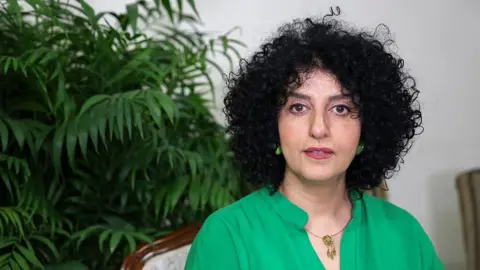
Narges Mohammadi, an Iranian Nobel Peace Prize winner, was taken to hospital after suffering severe injuries during her arrest last week, as detailed by her family.
The 53-year-old human rights advocate described in a phone call that she was brought to an emergency department twice following an assault by plainclothes agents, who allegedly struck her repeatedly with batons to the head and neck. This information was brought to light by the Narges Foundation.
Amidst no official comment from Iranian authorities, reports suggest her detention was linked to 'provocative remarks' made at a memorial ceremony in Mashhad on Friday.
Supporters and notable figures, including the Nobel Committee and filmmaker Jafar Panahi, have condemned her arrest, requesting her release.
Mohammadi gained international recognition for her activism advocating against female oppression and for human rights in Iran. As the vice-president of the Defenders of Human Rights Center in Iran, she has spent over a decade imprisoned, currently serving a 13-year sentence for charges of 'propaganda activity against the state'.
During her temporary medical release in December 2024, she continued her campaign for human rights and delivered a speech at a memorial for fellow activist Khosrow Alikordi, who was recently found dead in suspicious circumstances.
Eyewitnesses reported that Mohammadi was attacked at the event by approximately 15 agents, with accounts of hair-pulling and beatings with clubs. Following the incident, she informed her family that the impact of the assaults prompted medical attention twice due to her worsening condition.
Authorities have claimed that Mohammadi and others at the memorial urged attendees to chant 'norm-breaking slogans', justifying their actions during the event.
The Norwegian Nobel Committee expressed serious concern regarding the brutality of Mohammadi's arrest, calling for her immediate and unconditional release. Activists outlined the alarming implications of the incident for security and freedom in Iran, condemning the actions of authorities at the memorial.