In brief
The world mourns the loss of Breyten Breytenbach, a significant figure in the fight against apartheid whose literary and artistic contributions spanned decades, influencing generations of writers and activists alike.
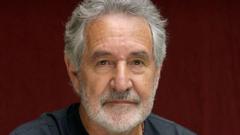
Renowned anti-apartheid writer and activist Breyten Breytenbach has died at the age of 85. His family confirmed he passed away peacefully in his sleep in Paris, surrounded by his wife, Yolande. Breytenbach was renowned for his fierce opposition to apartheid, embodying the spirit of resistance throughout his life. A family statement hailed him as "an immense artist, militant against apartheid," reflecting his lifelong commitment to a better world.Breytenbach's sharp wit and insightful critique of society earned him admiration and recognition around the globe. The British satirical show "Spitting Image" even referred to him as "the only nice South African" during the oppressive apartheid regime. Tributes have been pouring in, including a heartfelt remembrance from former French education minister Jack Lang, who described Breytenbach as "a rebel with a tender heart," acknowledging his allegiance to human rights causes.Breytenbach was born on September 16, 1939, in the Western Cape, and he spent much of his life abroad, but maintained a deep connection to his South African roots. His literary journey began at the University of Cape Town, where he became part of the Sestigers, a collective of Afrikaans writers dedicated to showcasing the beauty of their language while standing against the injustices of apartheid.Amid apartheid's rise, Afrikaans became associated with the state's oppressive policies. In a notable interview with The New York Times, Breytenbach expressed his complex relationship with the language, stating, "I'd never reject Afrikaans as a language, but I reject it as part of the Afrikaner political identity."Breytenbach's exile commenced in 1960, mainly in Europe, but his criticism of the apartheid regime remained unwavering. He worked in London before moving to France, where he met his wife, Yolande Ngo Thi Hoang Lien. Their interracial marriage faced obstacles, as Yolande was denied a visa to South Africa because of her race, highlighting the harsh realities of apartheid laws.In 1975, while at the peak of his literary acclaim, Breytenbach made a secretive return to South Africa and was imprisoned for seven years for attempting to support anti-apartheid resistance groups. His years behind bars produced one of his most impactful works, "The True Confessions of an Albino Terrorist," chronicling his harrowing experience, including two years spent in solitary confinement.Following his release in 1982, secured by former French President François Mitterrand, Breytenbach became a French citizen. After apartheid, he grew increasingly critical of the African National Congress (ANC) led by Nelson Mandela, describing it as a “corrupt organisation.”His activism extended beyond South Africa; in 2002, he penned an open letter to Israeli Prime Minister Ariel Sharon published in The Guardian, challenging the political status of Israel and advocating for Palestinian rights. Over his lifetime, Breytenbach authored more than 50 books, many translated into various languages, and produced surrealist paintings often focusing on themes of captivity.Breytenbach's contributions to literature and art earned him recognition as a Knight of the Order of Arts and Letters, France’s highest cultural honor. He is survived by his wife Yolande, their daughter Daphnée, and two grandsons, leaving behind a legacy that will continue to inspire those fighting for justice and equality worldwide.