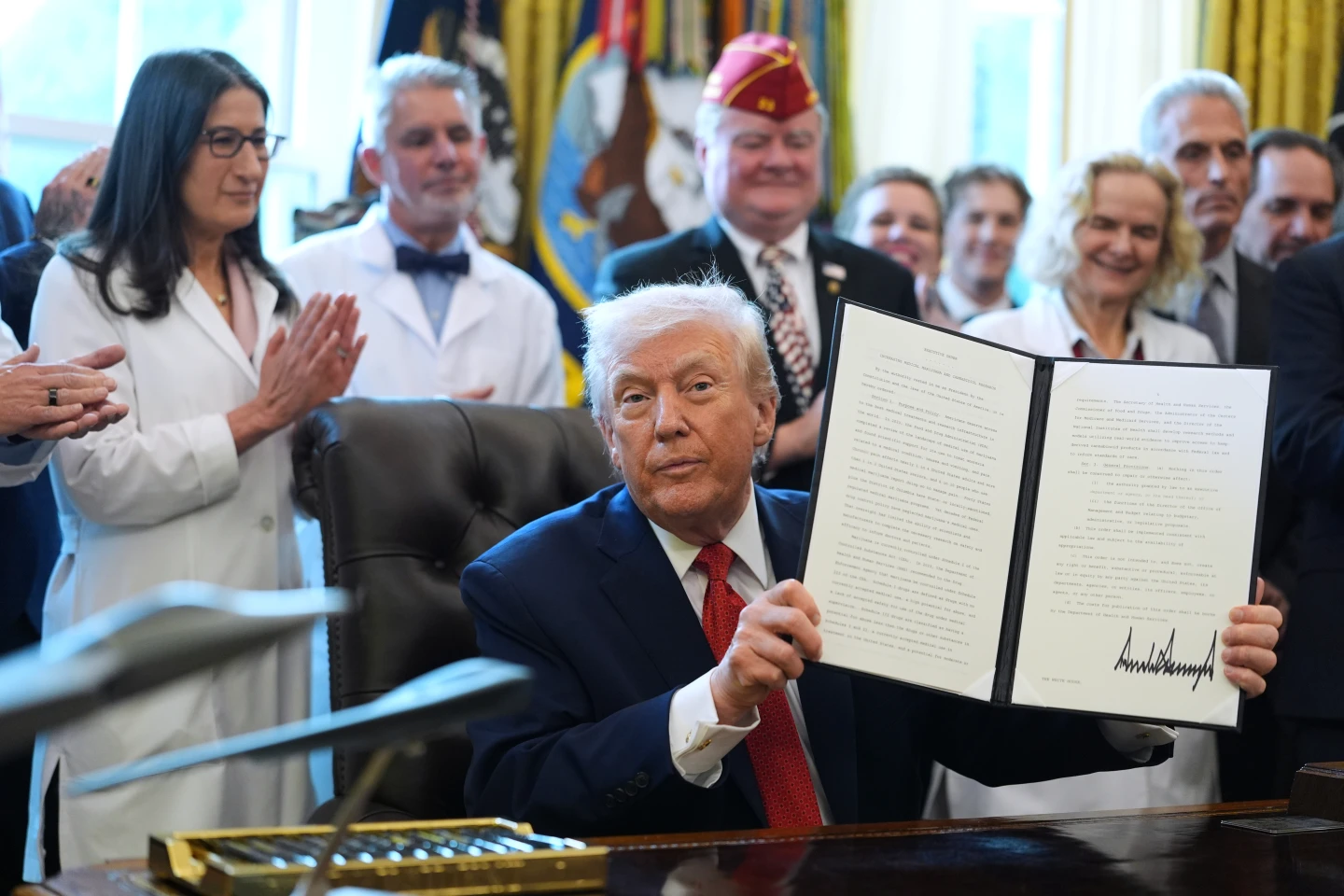
WASHINGTON (AP) — President Donald Trump signed an executive order Thursday that could reclassify marijuana as a less dangerous drug and open new avenues for medical research, a major shift in federal drug policy that inches closer to what many states have done.
The switch would move marijuana away from its current classification as a Schedule I drug, alongside heroin and LSD. Cannabis would instead be classified as a Schedule III substance, similar to ketamine and certain anabolic steroids.
Reclassification by the Drug Enforcement Administration (DEA) would not legalize recreational use for adults nationwide, but it may change oversight and reduce the financial burdens on the cannabis sector. Trump cited numerous calls urging him to take action, highlighting the potential relief for medical patients. We have people begging for me to do this. People that are in great pain, he said.
This proposal from Trump aligns with a previous push by the DOJ under Democratic President Joe Biden, suggesting a similar reclassification of marijuana. However, Trump did not enjoy as much support from his party for this decision; some Republicans have voiced opposition, insisting current standards remain in place.
Changing marijuana's classification requires a rigorous process, including a public commentary period that has already seen vast participation from the public. Trump’s order may expedite the review process, though the timeline for changes remains unclear.
Polling indicates a shift in public sentiment toward marijuana use, with 68% support for legalization growing from just 36% in 2005. The order also promotes expanded access to CBD, a hemp-derived product, under a new Medicare program for seniors upon doctors' recommendations.
Despite progress, over 20 Republican senators are urging Trump to keep marijuana classified as a Schedule I drug, citing concerns about potential health risks and implications for public safety. Trump has not committed to full decriminalization, having previously maintained that it should be resolved at the state level.
As he tackles drug issues, particularly fentanyl, Trump continues to navigate the complexities surrounding marijuana policy amidst increasing public advocacy for reform.
The switch would move marijuana away from its current classification as a Schedule I drug, alongside heroin and LSD. Cannabis would instead be classified as a Schedule III substance, similar to ketamine and certain anabolic steroids.
Reclassification by the Drug Enforcement Administration (DEA) would not legalize recreational use for adults nationwide, but it may change oversight and reduce the financial burdens on the cannabis sector. Trump cited numerous calls urging him to take action, highlighting the potential relief for medical patients. We have people begging for me to do this. People that are in great pain, he said.
This proposal from Trump aligns with a previous push by the DOJ under Democratic President Joe Biden, suggesting a similar reclassification of marijuana. However, Trump did not enjoy as much support from his party for this decision; some Republicans have voiced opposition, insisting current standards remain in place.
Changing marijuana's classification requires a rigorous process, including a public commentary period that has already seen vast participation from the public. Trump’s order may expedite the review process, though the timeline for changes remains unclear.
Polling indicates a shift in public sentiment toward marijuana use, with 68% support for legalization growing from just 36% in 2005. The order also promotes expanded access to CBD, a hemp-derived product, under a new Medicare program for seniors upon doctors' recommendations.
Despite progress, over 20 Republican senators are urging Trump to keep marijuana classified as a Schedule I drug, citing concerns about potential health risks and implications for public safety. Trump has not committed to full decriminalization, having previously maintained that it should be resolved at the state level.
As he tackles drug issues, particularly fentanyl, Trump continues to navigate the complexities surrounding marijuana policy amidst increasing public advocacy for reform.