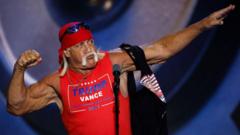
The former president made a splash at this summer's Republican National Convention when Hulk Hogan, also known as Terry Bollea, donned a Trump 2024 tank top and channeled his signature catchphrase, sparking enthusiasm among fans. Trump's reemergence in the wrestling scene comes over a decade after his last WWE appearance, but he appears as determined as ever to leverage this nostalgic connection to reignite his political career.
During a recent podcast with Mark Calaway, better known as The Undertaker, the conversation reflected Trump's strategy of engaging listeners who typically shy away from traditional political discourse, focusing on the emotional connection wrestling evokes. Highlighting the overlap between wrestling and politics, Calaway praised Trump, saying, “You’ve made politics fun again,” a sentiment echoed by many in the wrestling community, who have witnessed Trump's rise from an outsider to a mainstream political figure.
Analysts suggest that Trump's media strategy is targeting young men, capitalizing on the vast audience of wrestling podcasts and social media platforms. The Trump campaign aims to utilize his celebrity status and the engaging personas of wrestlers to connect with potential voters. Respected journalist Abraham Riesman noted that the queues of truth, lies, and half-truths often pushed in wrestling are reflective of political strategies, raising concerns about the shift of focus from policy to spectacle.
Trump’s history with wrestling dates back to the late 1980s, when he hosted events at his hotel in Atlantic City and engaged in feuds that captivated audiences, establishing himself as a captivating character. This intimate familiarity with wrestling dynamics is now being repositioned as a political asset as he vies for the presidency.
Despite the enthusiastic embrace from figures like Hogan, not all former wrestling stars support Trump. Dave Bautista, known for his tenure in WWE, has taken a strong stance against him, ridiculing his candidacy in media appearances. This polarization illustrates the complex landscape Trump navigates as he seeks to unify his supporters while fending off criticism.
Ultimately, Trump's interaction with wrestling legends represents a notable intersection between pop culture and electoral politics, potentially reshaping how candidates engage with voters in this evolving political arena. As the 2024 election nears, the blending of these worlds might lead to unexpected outcomes, relying heavily on the charisma of both Trump and his wrestling allies.
During a recent podcast with Mark Calaway, better known as The Undertaker, the conversation reflected Trump's strategy of engaging listeners who typically shy away from traditional political discourse, focusing on the emotional connection wrestling evokes. Highlighting the overlap between wrestling and politics, Calaway praised Trump, saying, “You’ve made politics fun again,” a sentiment echoed by many in the wrestling community, who have witnessed Trump's rise from an outsider to a mainstream political figure.
Analysts suggest that Trump's media strategy is targeting young men, capitalizing on the vast audience of wrestling podcasts and social media platforms. The Trump campaign aims to utilize his celebrity status and the engaging personas of wrestlers to connect with potential voters. Respected journalist Abraham Riesman noted that the queues of truth, lies, and half-truths often pushed in wrestling are reflective of political strategies, raising concerns about the shift of focus from policy to spectacle.
Trump’s history with wrestling dates back to the late 1980s, when he hosted events at his hotel in Atlantic City and engaged in feuds that captivated audiences, establishing himself as a captivating character. This intimate familiarity with wrestling dynamics is now being repositioned as a political asset as he vies for the presidency.
Despite the enthusiastic embrace from figures like Hogan, not all former wrestling stars support Trump. Dave Bautista, known for his tenure in WWE, has taken a strong stance against him, ridiculing his candidacy in media appearances. This polarization illustrates the complex landscape Trump navigates as he seeks to unify his supporters while fending off criticism.
Ultimately, Trump's interaction with wrestling legends represents a notable intersection between pop culture and electoral politics, potentially reshaping how candidates engage with voters in this evolving political arena. As the 2024 election nears, the blending of these worlds might lead to unexpected outcomes, relying heavily on the charisma of both Trump and his wrestling allies.