In brief
Arc'teryx has come under fire for a fireworks display conducted as part of a promotional event in Tibet, which raised concerns about its impact on the local ecosystem. The company has apologized for the incident, stating it was inconsistent with its conservation values. Critics have called for accountability and a reevaluation of such projects, emphasizing the endangered nature of the Himalayan region.
Chinese officials are investigating outdoor clothing brand Arc'teryx after it apologised for a fireworks display in the Himalayan region of Tibet, which drew backlash for its potential impact on the fragile ecosystem.
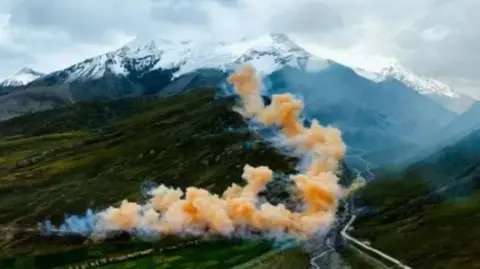
Videos from the 19 September event show multi-coloured fireworks erupting across foothills in a display designed by Chinese artist Cai Guo Qiang as part of a promotional campaign.
But the show sparked a barrage of criticism online, with people saying the stunt contradicts Arc'teryx's image as a conservation-focused brand and calling for a boycott of its clothing line.
The Canadian firm apologised for the display, saying it was 'out of line with Arc'teryx's values'.
The firm said that it will work with an external agency to assess the project's impact, adding that it had used entirely biodegradable materials. Arc'teryx also said that the spectacle was aimed at raising awareness of mountain culture.
Founded in 1989, Arc'teryx is hugely popular for its high-end sportswear and mountaineering gear and runs more than 150 shops globally. It is owned by Hong Kong-listed fitness equipment company Anta Sports.
It partnered with pyrotechnics artist Cai to stage the high-altitude day-time display called Rising Dragon, set at over 5,000 meters in Tibet's Shigatse region, a gateway to Himalayan peaks like Everest.
The mountains are also sacred to people in Tibet, where many follow Buddhism. It has been a tightly-controlled part of China since it was annexed in the 1950s, leading some online to ask how and why the project was approved in the first place.
Critics said the mountains were too fragile for fireworks, and the explosions, colour and smoke would have disrupted the ecosystem and local wildlife.
A top comment on Arc'teryx's apology post said the display was 'not something that can be forgiven with a single apology post' and urged the company to take responsibility for any long-term environmental impact.
Another commenter questioned how a project of such scale could have been approved by so many people.
'The public's criticism has alerted us that the evaluation of the expression of art needs to be more professional and we need to be more humble and respectful of nature,' Arc'teryx said in its statement.
Mr Cai, the artist who has also been criticised, has apologised for his role and said he would work with authorities to help in the area's recovery.
The 67-year-old artist made his name with gunpowder paintings and outdoor pyrotechnic displays. He famously oversaw fireworks for the 2008 Beijing Olympics.